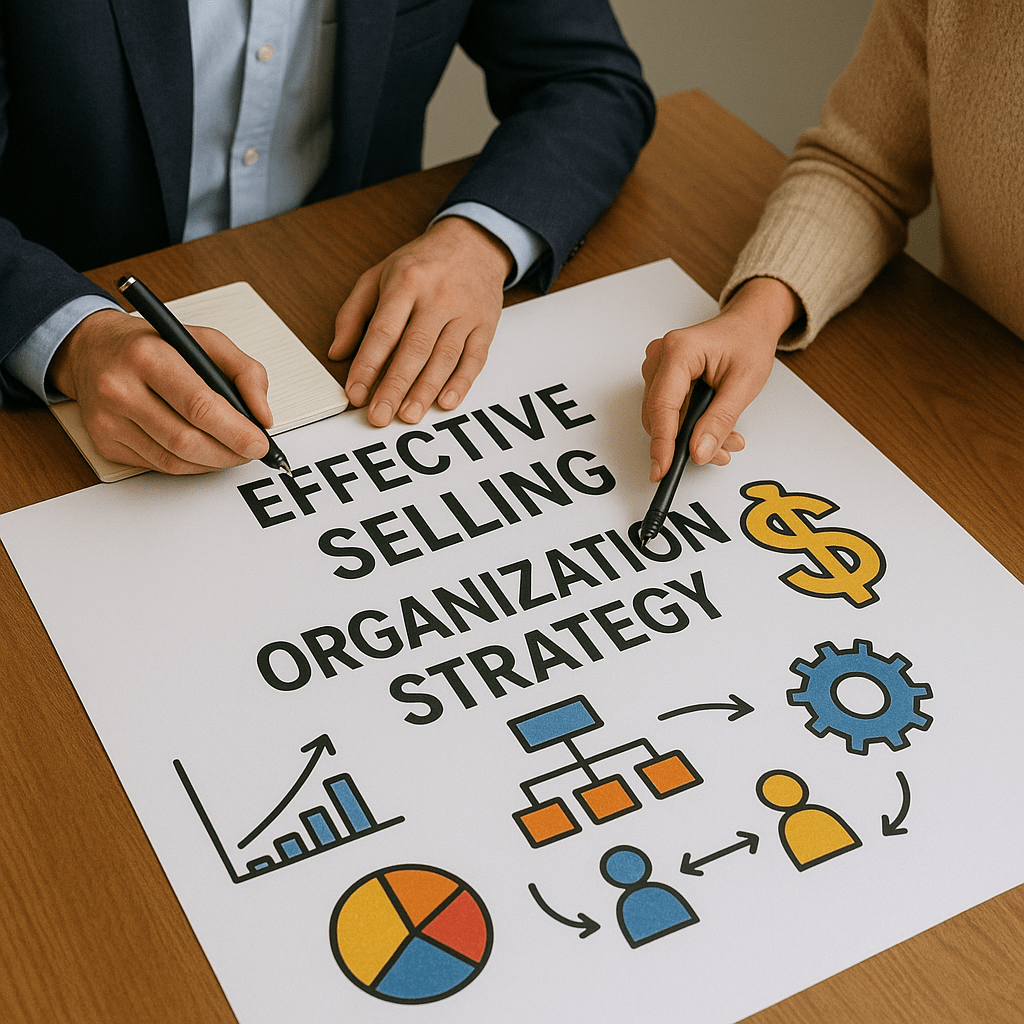
In this part of the series, we focus on “Selling your strategy” – or more precisely, gaining advocates and supporters for your transformation initiative. No matter how genuine your intentions or how compelling your vision, at some point you’ll need to collaborate with people to bring it to life. This journey becomes significantly smoother when stakeholders not only understand and accept the transformation goals but also align themselves with the defined objectives.
This article can also be read on ProjectManagement.com: https://www.projectmanagement.com/articles/1109619/Organizational-Transformation–Selling-Your-Strategy
In my opinion, success in this phase hinges on one keyword: “acceptance.” As individuals, groups, and societies, we only commit 100% of our effort to what we truly accept or believe in. While the idea is simple, achieving broad alignment with the masses is incredibly challenging. Simply put, transformation and efficiency are valuable goals, but everyone has their own definition on the what, the how and the when part of it.
The challenge is to establish alignment and acceptance on the primary objectives from the outset and to sustain that alignment throughout the transformation program. It’s an iterative process that warrants a dedicated effort to establish a shared definition of success—one that remains updated and relevant as the program navigates its inevitable highs and lows over time.
I highly recommend establishing a shared definition of success to align all stakeholders with the set mandate. As the famous quote from The Lord of the Rings goes: ‘One ring to rule them all, one ring to find them, one ring to bring them all, and in the darkness bind them.’ Not in a dark sense, of course—but the same idea applies to having a common purpose that unites everyone and keeps them focused on a shared goal. The “Project Success Report” inspired me to add the above thought to this part of the article. I will highly recommend everyone to read the full report here.
Let’s start with the most common scenario: the need for transformation is identified, concrete measures and expected outcomes are agreed upon, a comprehensive strategy is established, and a high-level plan is drafted. So far, so good. Now comes the challenging part—getting the entire organization to align and deliver on this strategic initiative. Before you know it, problems start to emerge. Most of the organization is unaware of the strategy, and many don’t even agree with the need for such an investment. Where there is agreement, there is no consensus; where there is consensus, there is no awareness; and where there is awareness, there is no clear understanding or acceptance of the approach. The cycle continues. So, what went wrong? The intentions were good, and the cause was just. In my opinion, the answer is simple: you failed to sell your ideas to the organization while focusing primarily on the specifics of implementation. For me, selling in this context goes beyond simply informing or communicating effectively – it is a continuous process of engagement that ensures people remain aligned with their purpose and the defined objectives.
There are several steps you can take to prevent such misalignments. Here are a few recommendations:
1. Encourage participation and delegate ownership
One of the primary factors influencing the success of any project or program is active participation. (Here, participation goes beyond mere attendance; it involves actively and consistently fulfilling the mandate of your role in the project.) The responsibility for encouraging such participation lies with everyone involved, but it primarily falls on the leaders to ensure that people are empowered to engage in a structured and resourceful environment. Additionally, I highly recommend delegating clear ownership at every level of engagement (task, project, program) to foster a sense of responsibility to achieve the expected outcomes. Ownership should not be viewed as a liability; rather, it should cultivate a sense of pride in one’s contribution and motivate individuals to deliver on the set mandate.
2. Deal with resistance through inclusion
I can start with a quote from Winston Churchill “Victory will never be found by taking the path of least resistance”. Resistance is just as important as compliance and needs to be handled with care, giving it the attention and importance, it deserves. Handling and channeling the energy of resistance into productive means, and aligning it with the project mandate (or adjusting the mandate when necessary), goes beyond the scope of traditional project management. In my view, it requires a certain level of understanding and maturity to assess different perspectives—regardless of how misaligned they may appear initially—while maintaining alignment with the project mandate. It involves allowing or rejecting resistance with grace, in a way that does not discourage future resistance. In my experience, the best outcomes are achieved in an environment of inclusion, where resistance is addressed through joint discussion and assessment. The process should always begin with consensus on the project mandate and intended outcomes, with the shared goal of enhancing project results through collective effort and open discussion on the specifics and motivation behind such resistance.
3. Avoid the Generalization disaster
None of us are immune to situations of chaos that lead to prolonged conflicts, causing delays and, in many cases, permanent damage to team morale. These situations often stem from how effectively information flows and how efficiently it is utilized. I would also add that not all chaos is negative—sometimes it serves as a trigger to act and realign people with the project mandate. However, there are cases where such chaos has a detrimental impact.
This typically occurs when individuals or teams are not equipped, aware, or prepared with the appropriate level of information, leading them to perceive risks, conflicts, or develop siloed opinions (sometimes beyond their scope), which can cause discomfort and/or fear. I refer to this as the ‘generalization disaster,’ because it is often caused by a lack of awareness and conflicting interests, which arise from the generalization of very specific issues. This is further exacerbated by the absence of moderation and structured intervention.
There is no room for generalization in a project, especially when dealing with project specifics. Several measures can be taken to avoid or mitigate such situations, including but not limited to structured and aligned discussions (meetings), goal localization to ensure every team or project has a specific mandate, distinguishing between discussion and measures, clear definition of roles and responsibilities, and defining the scope of responsibility, to name a few. Effective expectation management can also reduce the occurrence and impact of such generalization issues
4. Always Follow the shared interest
A transformation program thrives on the active and effective participation of its people. Each individual brings their own interests, and we all strive to represent these interests through our involvement in the scope of our engagement. It’s imperative that our individual interests are aligned with the project interest and our success is connected to the success of the project. But more than often, it so happens that we don’t find ourselves aligned and require moderation or support to realign or separate our interests. Here I can only recommend to always follow the shared interest as a benchmark to align individual interests. At the end, the intention should always focus on alignment and enablement but when the very foundation of the engagement is based on a shared interest such as “IT Transformation” in this case, we have to prioritize the shared interest over siloed interests.
Conclusion
What I aim to convey in this article is that, as leaders, you need to focus on more than just a solid strategy and planning. You must also be able to successfully communicate and ‘sell’ the strategy and plan to your teams and organization to increase the likelihood of success in such initiatives. The more connected and shared the goals are, the greater the chances that each involved part will effectively contribute toward the expected outcome. I’m sure there are countless other experiences my colleagues here have gathered, and I would love to hear from you.
Our world is changing, and sustainability is gradually replacing profit and ambition as the primary driver of success. I also believe we need to broaden the definition of sustainability. It’s not just about conserving and responsibly using resources, but also about empowering and enabling people to set and achieve today’s objectives while evolving to meet the needs of tomorrow. The dynamics of success go beyond achieving outcomes and generating value; they must also account for the development and sustenance of the people who make it happen—both now and in the future. I think we can all agree on one thing: while the scale and specifics may change, the journey of transformation is endless. In the last part of this series, I will focus on ‘Establishing Continuity and Sustaining Progress,’ where we will discuss business continuity and sustainability.








Leave a reply to Organizational Transformation Strategy – Ask the right questions and accept facts – Project Management Logs Cancel reply